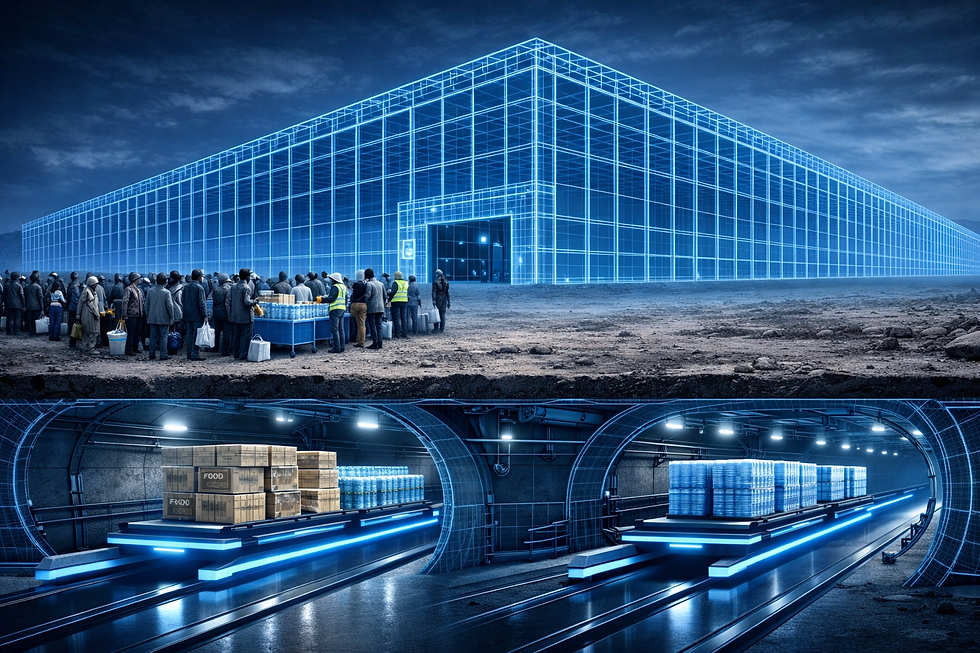
A gigantic concrete shed serves as a secure, centralized hub for storing essential supplies—food, water, medicine, and tools—for third world nations and impoverished communities. By allocating one shed per location, it ensures rapid, organized distribution during crises, supports local aid efforts, and strengthens disaster preparedness. These sheds promote logistical efficiency, reduce supply shortages, and foster community resilience. They also symbolize hope and stability, offering a foundation for future development and humanitarian outreach in vulnerable regions.
Attack the problem / poverty from below
Active
The Shed
Overview
The Shed is a simple concept focused on storing essential supplies in one secure, central location for communities that need reliable access to basic resources. Overview sections usually explain that each shed holds food, water, medicine, tools, and other essentials, making distribution easier during emergencies or periods of hardship. Forecast pages tend to mention steady interest in practical support systems that help vulnerable regions prepare for future challenges. Data pages often include basic figures on storage capacity, supply turnover, and general usage patterns. Charts and graphs usually show trends in improved access, reduced shortages, or gradual increases in community resilience. Budget estimates outline typical costs for construction, stocking, transport, and routine maintenance. The rationale behind The Shed is generally framed around strengthening local stability, supporting families, and giving communities a dependable foundation during difficult times. Focused on 3rd world nations and locations of need or order.
Forecast
The Shed begins as a large, reinforced concrete structure designed to store essential supplies—food, water, medicine, and tools—in regions facing chronic poverty and recurring crises. Early implementation focuses on placing one shed per vulnerable location, proving the model’s ability to stabilize distribution, reduce shortages, and support rapid response during emergencies. As the system demonstrates reliability, scalability becomes achievable through coordinated planning with local governments, aid organizations, and international partners. Over time, The Shed evolves into a global network of secure supply hubs, strengthening community resilience and improving long term preparedness. These structures also become symbols of hope, offering a foundation for future development and humanitarian outreach. With steady expansion, The Shed forms part of a broader strategy to uplift impoverished regions, ensuring that essential resources are always within reach. It represents a practical, future focused solution built on the belief that every community deserves stability, dignity, and the chance to thrive.